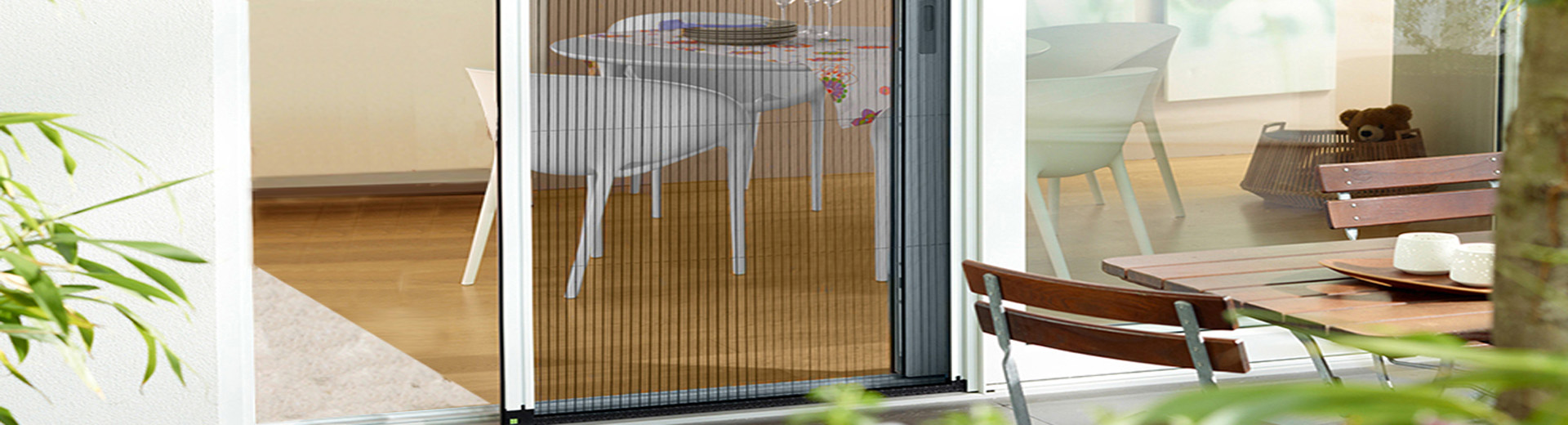
| Item | Available Options |
|---|---|
| Screen Type | Horizontal or vertical pleated screen window |
| Frame Material | Aluminium extrusion profile |
| Mesh Material | Pleated polyester mesh |
| Frame Colour | White, black, brown, grey and custom finishes |
| Mesh Colour | Black, grey and other available colours |
| Window Size | Standard sizes or custom dimensions |
| Opening Direction | Left, right, upward or downward, depending on system design |
| Installation | Face-fix, recess-fit or project-specific installation |
| Packaging | Colour box, neutral box, OEM carton and customised instructions |
| Branding | Private label, logo printing and OEM packaging |
The core component of a pleated screen window is the folded mesh. Pleated polyester mesh is designed to maintain a regular folding structure during repeated opening and closing cycles.
Black and dark-grey mesh are commonly specified because they provide lower visual contrast when viewed from inside the building. For bulk projects, buyers should confirm mesh weight, pleat geometry, colour consistency and crease retention before approving production.
For project orders, the approved sample should become the reference standard for incoming material inspection and final assembly.
The aluminium extrusion profile determines frame rigidity, installation accuracy and the operating alignment of the pleated mesh. Profile dimensions should be selected according to the window opening, screen size and expected operating frequency.
Common specifications include powder-coated aluminium profiles in white, black, brown or project-specific colours. For large orders, profile wall thickness, coating quality, dimensional tolerance and cut-length accuracy should be included in the purchasing specification.
A pleated screen window system is not defined by mesh alone. The aluminium frame, tension components, guide tracks, connecting parts and mesh must operate as one assembly.

Liens amicaux :